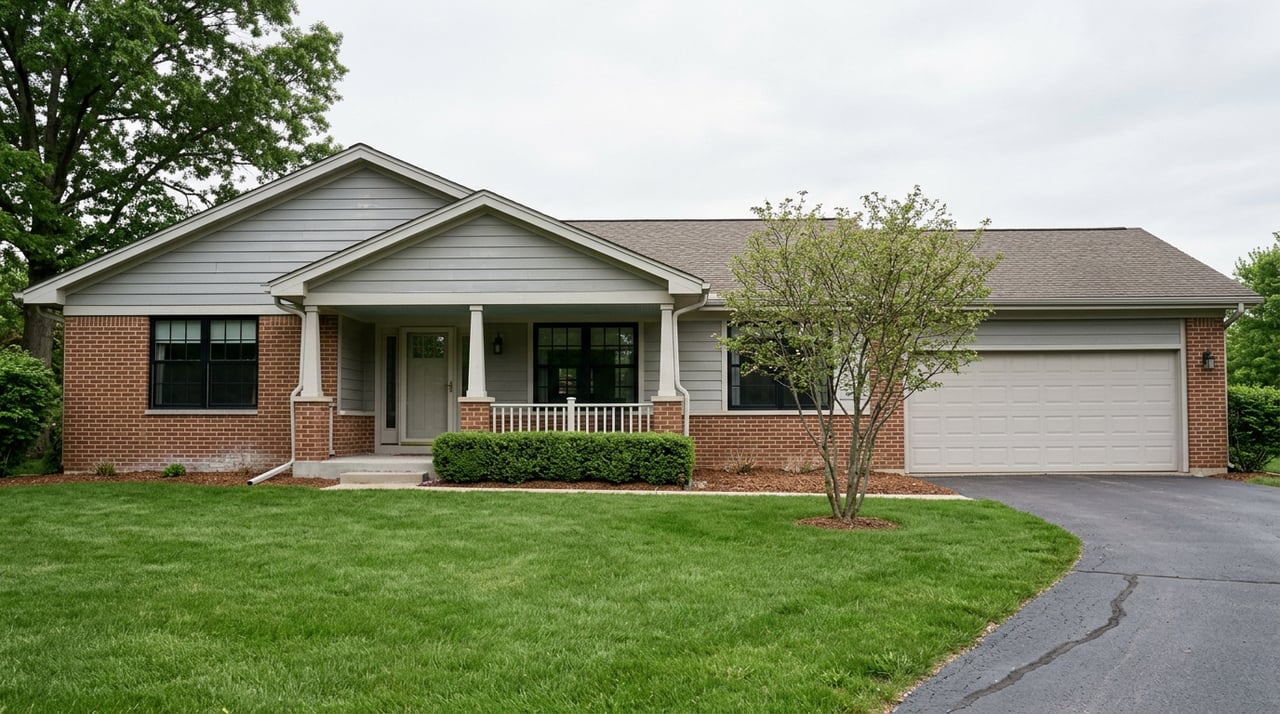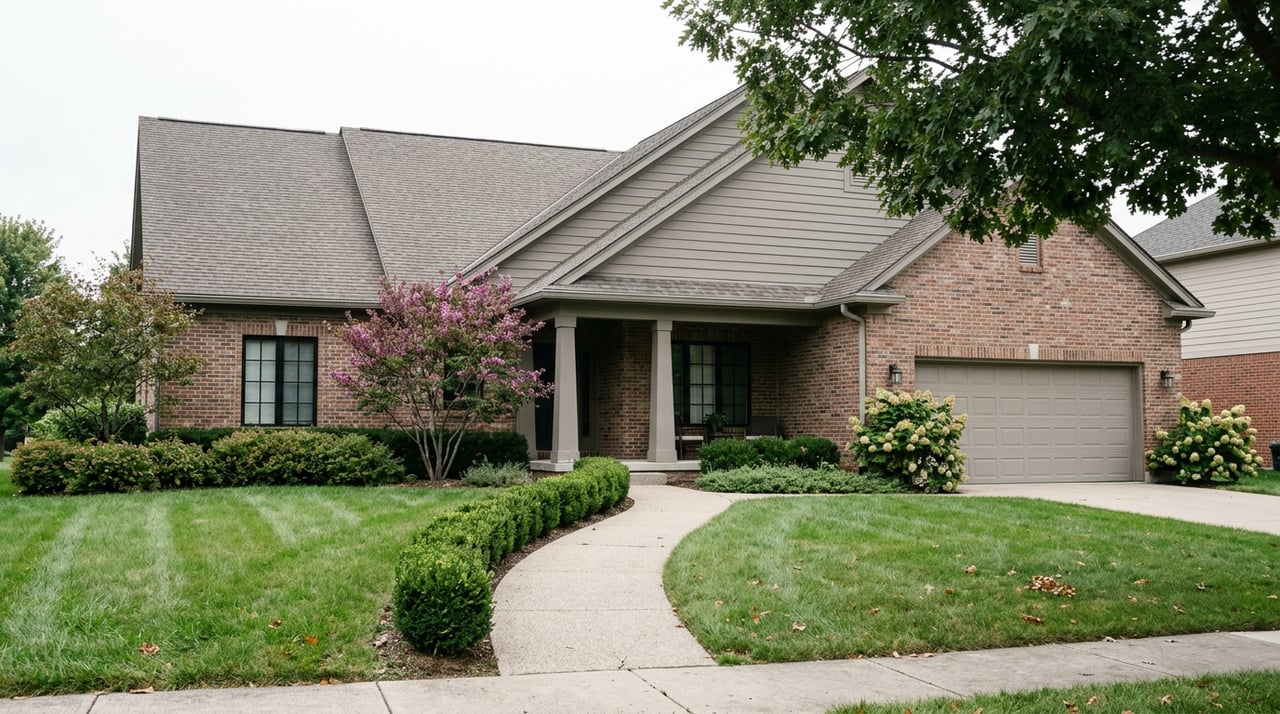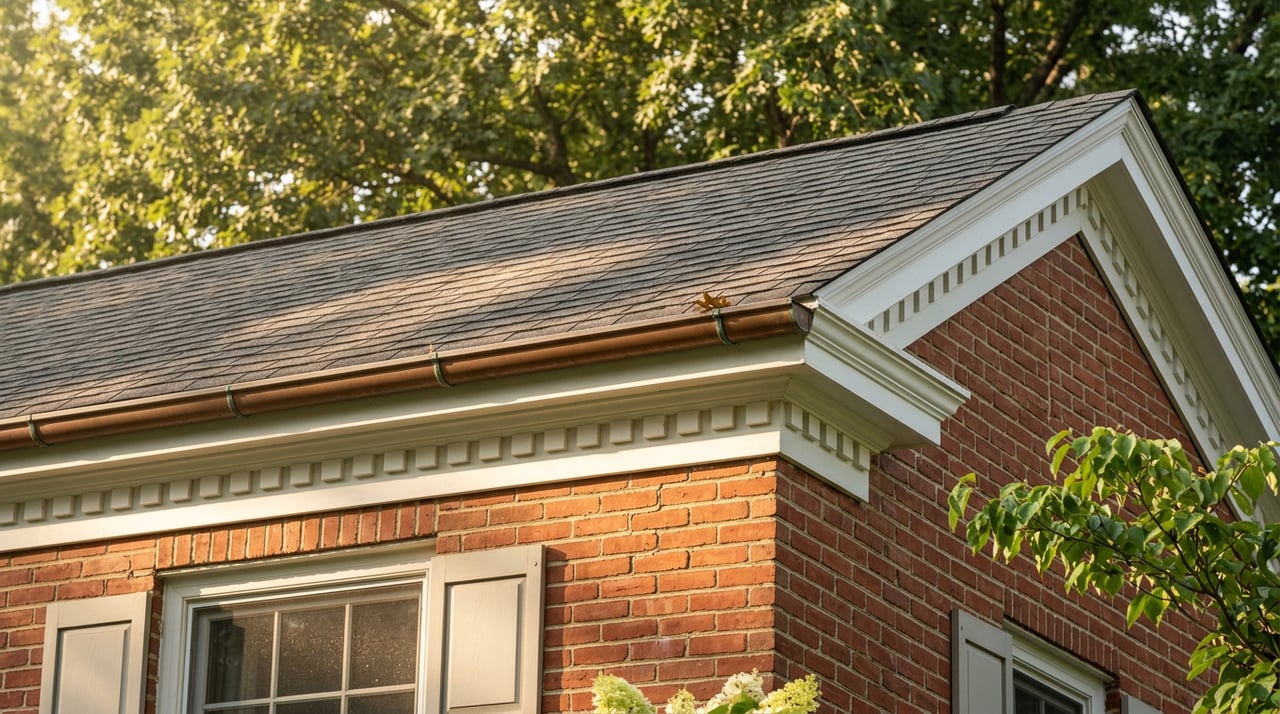
Two houses sold in Edwardsville this spring. One was a renovated four-bedroom within walking distance of downtown, listed north of $500,000. The other was a three-bedroom ranch in an older subdivision closer to Route 159, closed in the low $200,000s. Both are Edwardsville. Both share the 62025 ZIP code. Neither one is the median.
If you have been comparing Edwardsville to Ballwin, Fenton, or O'Fallon by median price alone, you are working with a number that describes almost none of the houses actually on the market. That is the argument of this post: Edwardsville is not one market with a middle. It is three markets sharing a name, and the gap between what buyers pay and what sellers ask is the evidence.
The number that doesn't add up
Pull the current data and the discrepancy jumps out. As of July 2026, the median list price in Edwardsville sits around $415,000, with homes spending a median of 62 days on the market. The most recent median sale price tracked by Redfin comes in near $280,000. Zillow's Home Value Index, which smooths across the whole housing stock, lands between them at $320,541 as of February 2026, up 4.6% year over year.
A $135,000 spread between list and sale is not a normal rounding error. It is what happens when a small number of high-priced new-build and renovated listings sit on the market for months and drag the asking-price average upward, while the homes that actually close each month cluster in a much lower band. Days-on-market of 62 is the fingerprint. In a single-tier market, that number would be closer to 30. In Edwardsville, it reflects listings that are priced for one submarket and buyers who are shopping in another.
Three Edwardsvilles inside one ZIP code
Once you stop treating Edwardsville as a single market, the pricing behavior makes sense. Here is how the submarkets actually break down.
| Submarket | Typical buyer | What the budget buys | Key friction |
|---|---|---|---|
| Historic core near downtown and SIUE | Move-up buyers, professionals wanting walkability | Renovated older homes, often $400K to $600K+ | Small lots, older systems, renovation quality varies wildly |
| Established subdivision belt | First-time buyers, right-sizers, families on a budget | 1980s to 2000s ranches and two-stories, often $220K to $340K | Deferred maintenance, dated finishes, appraisal gaps on updated comps |
| New-build outer ring and rural edge | Move-up families, custom-build buyers | New construction from mid-$300Ks, rural lots from $80K | Long build timelines, HOA rules, distance from downtown amenities |
The historic core
Homes walking distance to Main Street or St. Louis Street trade on scarcity. A recent Redfin listing described a home "within walking distance of downtown Edwardsville" that had been taken to studs, rebuilt with two ensuite bedrooms, and repositioned as effectively new construction inside a historic shell. Those homes carry the top of the list-price range and pull the median upward. They are also the listings most likely to sit if priced ambitiously.
The established subdivision belt
The bulk of actual closings happen here. These are the ranches and traditional two-stories built between the late 1970s and mid-2000s, tucked into neighborhoods off Governor's Parkway, Route 157, and the older sections south of downtown. A buyer coming from Ballwin or Kirkwood with a $300,000 budget will find real inventory in this belt. A buyer coming from Zillow expecting the $415K list-median experience will feel confused, because the houses in their price range look nothing like the ones dominating search results.
The new-build outer ring
New construction in Edwardsville shows a median list around $343,000 based on current Redfin new-construction inventory. Named subdivisions active right now include Stone Cliff's second addition, Hawthorne Hills, Stonebriar, Ebbets Field with lots priced $79,990 to $97,990, and Vicksburg Commons. Further out, Cedar Ridge off Old Carpenter Road offers 2 to 4.5 acre lots across 36 homesites on 96 acres, roughly 1.5 miles from city limits. These are meaningfully different products from the historic core, sold to a different buyer, at a different pace.
Why Goshen Road matters more than the median
Median-price stories miss local catalysts. Edwardsville has one that is worth understanding before you write an offer anywhere north or east of downtown.
In 2024, the city received a $21.2 million federal grant from the U.S. Department of Transportation for the Goshen Road and Liberty Trail multi-modal improvement project. The corridor connects business districts, District 7 schools, residential neighborhoods, Anderson Hospital's Goshen Campus, and Plummer Family Sports Park. Public Works Director Eric Williams told the Edwardsville Intelligencer the Goshen Road improvement had been on the city's list for the 26 years he had worked there.
For a buyer, this matters in two directions. Houses along or adjacent to the corridor will spend part of the ownership window living next to active construction. Houses within a short drive of the completed corridor, including the newer subdivisions near Plummer Family Sports Park and Park North, will be reachable through a modernized route with better bike and pedestrian access. The Pointe development at the northwest corner of I-55 and IL-143 sits directly in the improvement zone's gravitational pull, along with the Ironworks retail center on Plum Street, which anchors the Goshen Trail with tenants including Sugarfire Smokehouse, Global Brew Tap House, Chicken Salad Chick, Strange Donuts, and Just Right Eating.
If you are comparing two Edwardsville houses at the same price, the one closer to the improving corridor is not the same asset as the one on a quiet cul-de-sac five miles away. The median cannot see that. You have to.
Where the friction actually lands
The three-submarket structure creates specific transaction problems buyers rarely anticipate until they are inside them.
Appraisal gaps in the subdivision belt. When one house in an older neighborhood is fully renovated and the surrounding sales are original-condition, the appraisal for the renovated home often comes in below contract. Buyers who stretched to their max on a beautiful listing find themselves short of cash to close. Sellers who renovated expecting to price like the historic core learn the appraiser is drawing comps from a different submarket.
New-construction timeline risk. Contracts on to-be-built homes in Stone Cliff, Stonebriar, or Hawthorne Hills lock in a price and finish package months before closing. Rate-lock windows and lease-end dates rarely line up cleanly with builder timelines, and change-order costs add up.
Rural lot due diligence. Homes on acreage near Cedar Ridge or off Old Carpenter Road often sit outside city water and sewer. Well and septic condition, easement language, and setback rules on Madison County parcels are meaningfully different from what a buyer coming from a St. Louis County subdivision has ever encountered.
Downtown-core inspection surprises. Older homes near St. Louis Street can carry knob-and-tube remnants behind newer drywall, unpermitted additions, and drainage issues on tight urban lots. A renovated look does not always mean a renovated skeleton.
None of these show up in a median. All of them show up at the closing table.
FAQ
Is Edwardsville still appreciating? Zillow's Home Value Index for Edwardsville was up 4.6% year over year through February 2026, sitting at $320,541. That is steadier appreciation than headline list-price movement suggests, because the index is built across the whole housing stock rather than the mix of active listings.
How does Edwardsville compare to the Missouri side for a first-time buyer? The subdivision belt described above is where cross-river buyers usually find the closest match to entry-level pricing in Fenton or Affton, generally in the $220K to $340K range. Property tax structure differs meaningfully between Illinois and Missouri, and that difference is worth modeling into your monthly payment before you commit to a side of the river.
Why do homes sit 62 days when the market is described as competitive? Because two different markets are being measured at once. Well-priced homes in the subdivision belt move fast. Aspirationally priced homes in the historic core and premium new construction sit. Averaging both produces a days-on-market number that describes neither.
Working out which Edwardsville is yours
The median price will not tell you what your money buys here. The submarket will. Whether you are downsizing out of a larger home, relocating from the Missouri side, or buying your first house in the District 7 boundary, the right first question is not "what does Edwardsville cost" but "which Edwardsville fits the life you are trying to build."
If you want a plainspoken read on which of the three submarkets matches your budget, timeline, and tolerance for renovation risk, Kim Benda and Angela Jett work both sides of the river every week and can walk you through it before you tour a single house. Start My Downsizing Journey.