A small plastic canister sits on a shelf in a Fenton basement for 48 hours, quietly collecting air samples while the rest of the sale moves forward on schedule. Nobody in the house notices it. But by the time it goes back to the lab, it will have already decided something about the deal that neither the seller nor the buyer fully understands yet: who gets to set the terms of the next conversation.
That's the part most radon guides skip. They'll tell you radon is a Class-A carcinogen, that testing takes two days, that mitigation systems exist. All true. What they don't explain is that in a market like Fenton's, where homes are dating back to the 1960s and sitting on ground known for producing high readings, the test itself functions less like a health check and more like a negotiating chip. The question isn't whether your home has a radon problem. It's whether you find out about it before your buyer does.
Radon Readings in Fenton
Fenton sits in St. Louis County on limestone bedrock, the kind of geology that produces elevated radon readings across the metro area. Statewide, Missouri's Department of Health and Senior Services runs a residential testing program, and its own data shows that one in three homes tested came back above the EPA's action level of 4.0 pCi/L. That's not a Fenton-specific number, but it tells you the baseline risk in this part of the country is already high before you factor in local conditions.
The handful of user-submitted readings on file for Fenton specifically run even higher, averaging in the neighborhood of 14 to 16 pCi/L. That's a small sample, not a scientific survey, so treat it as a signal rather than a verdict. But it lines up with what the geology predicts: this is not a market where you can assume your house is fine because the one down the street tested clean. Radon behaves unevenly even between neighboring lots, because it depends on how each foundation interacts with the soil gas beneath it.
The Basements Behind the Numbers
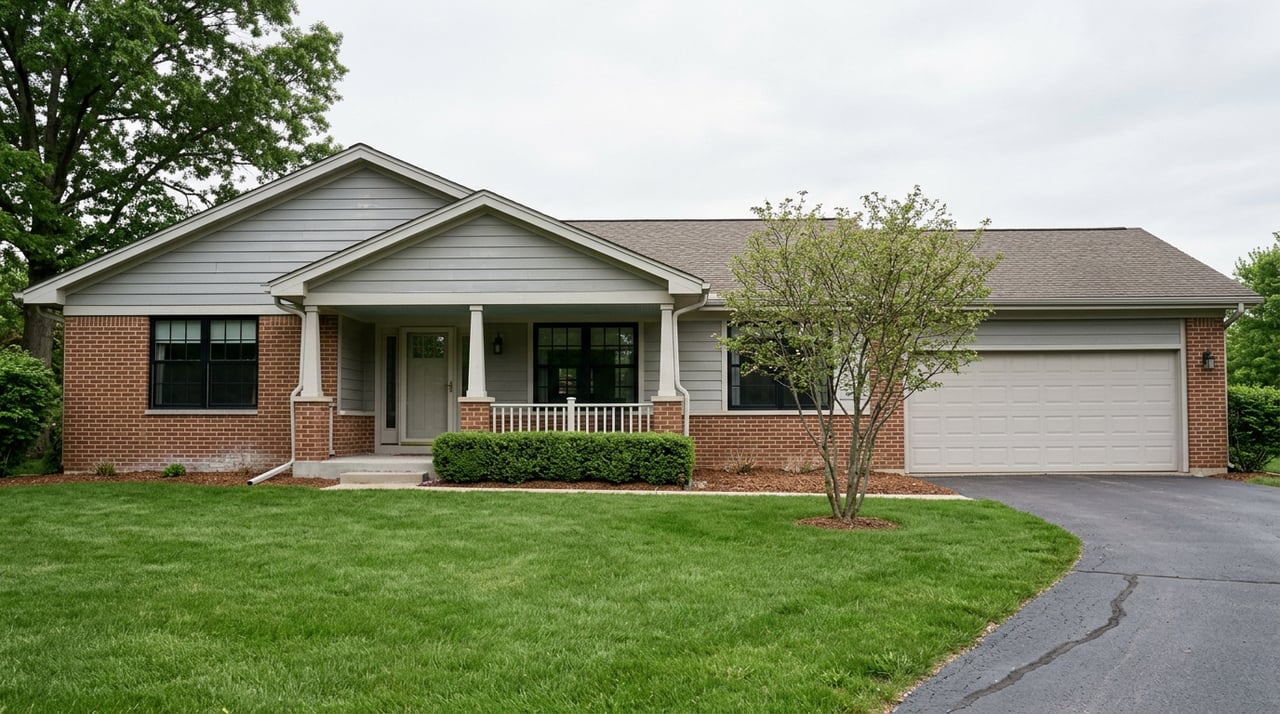
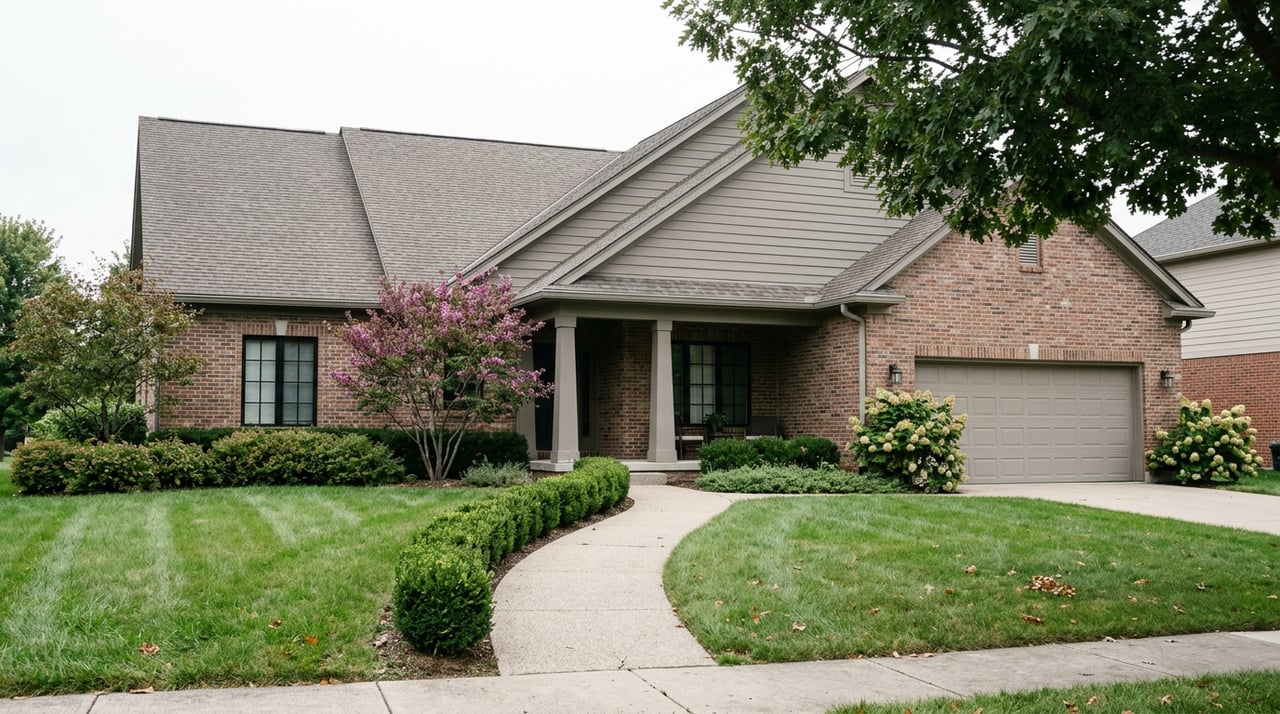
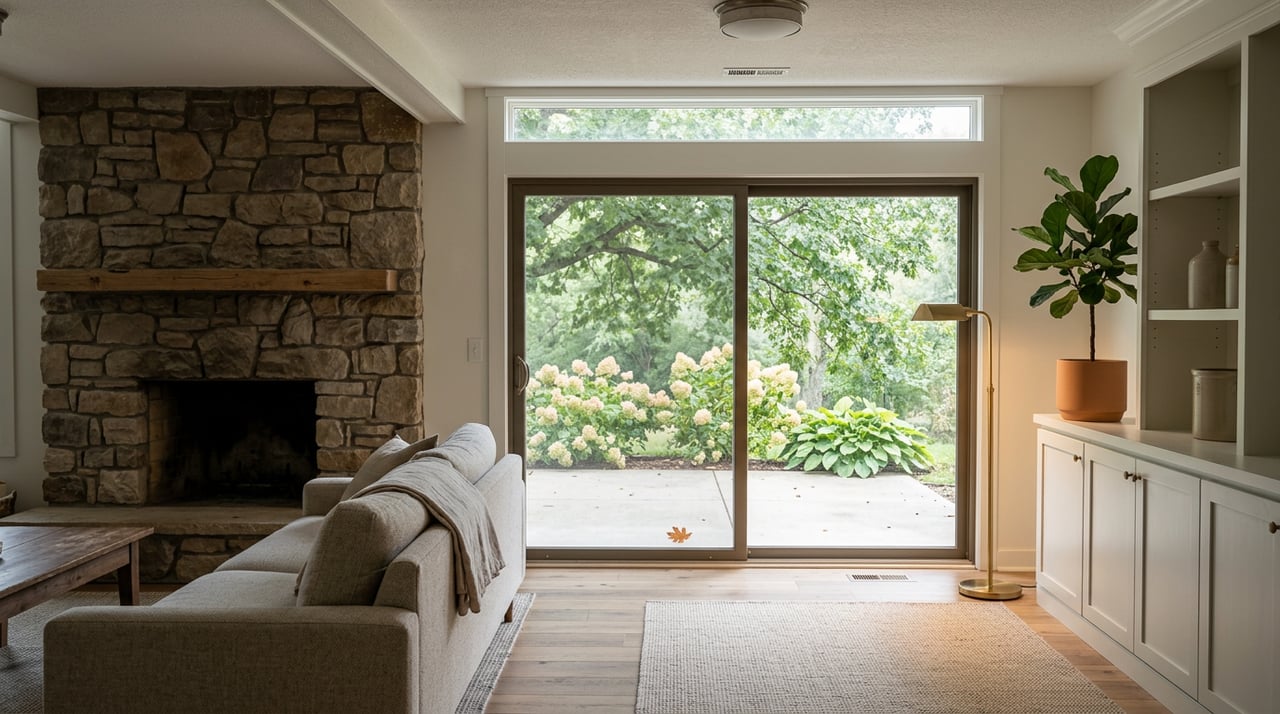
Part of what makes this a live issue in Fenton, rather than an abstract statistic, is the age and construction of the housing stock. Subdivisions like Bent Tree Trails, Uthoff Valley, San Simeon, and Sancta Maria Estates were largely built between the 1960s and early 2000s, the same era local remodelers describe as producing homes with basements that are often unfinished or only partially updated, with humidity and ventilation issues that show up during renovation work. Radon collects in exactly these spaces: low, enclosed, poorly ventilated levels where a family might store holiday decorations but rarely spends real time.
Newer construction in areas like Riverside, closer to the golf course and the city's trail network, doesn't automatically solve the problem either. Radon comes from the ground, not the building materials, so a fresh foundation poured over the same limestone shelf can test just as high as a fifty-year-old one. What changes with age is less the radon level and more the likelihood that a seller has never thought to check, because nobody flagged it the last time the house changed hands.
The Law That Sounds Like Protection and Isn't
Here's where the incentive structure gets interesting. The Missouri Department of Health and Senior Services says sellers are not required to test for radon before closing. On paper, that sounds like sellers are in the clear. In practice, it creates a strange incentive to stay uninformed.
The standard seller's disclosure form used across the state, put together by the Missouri Association of Realtors, asks directly whether you're aware of any radon test results showing elevated levels. But if you've never tested, there's nothing on file to disclose, and no state law forces you to go find out.
That's not a loophole so much as a fork in the road, and most sellers don't realize they're standing at it. Order a test before listing, and you now have knowledge. Skip the test, and you're technically compliant, right up until the buyer's own inspector orders one during their inspection period, at which point the information surfaces anyway, just later and with someone else controlling the timeline.
What Happens When the Buyer's Test Comes Back High
This is the scenario that actually plays out in Fenton and across the region often enough to be worth walking through. A home goes under contract. The buyer's inspection turns up nothing major on the roof, HVAC, or foundation. Then the radon test, ordered as a standard add-on to most St. Louis area inspections at this point, comes back at 6 or 7 pCi/L, comfortably above the 4.0 action level.
At that point, the buyer typically asks for one of two things: a mitigation system installed before closing, or a price credit to cover it themselves. Either way, the seller is now negotiating from inside a signed contract, on the buyer's clock, often with a closing date that doesn't leave much room to shop around for a mitigation contractor. Certified installers in this price range, generally $800 to $2,000 for a typical single-family home according to local radon service providers, are not always available on short notice, and a seller who hasn't budgeted for this cost is absorbing it as a surprise rather than a planned expense.
Why Testing First Changes Who Holds the Leverage
Flip the order of operations and the whole conversation changes. A seller who tests before listing, using a short-term test that runs $150 to $250 through a certified provider, learns the number weeks or months before any buyer ever sees the house. If the reading comes back clean, that's a selling point worth mentioning. If it comes back elevated, the seller can get quotes on their own schedule, choose their own contractor, and either complete the mitigation before listing or price the home with the cost already factored in.
That's the difference between a known cost you planned for and a demand you're negotiating under pressure. It's also, frankly, the difference between a seller who looks prepared and one who looks like they're scrambling, which matters in how a buyer approaches every other part of the negotiation once radon becomes the topic.
A Timing Note for Late Summer 2026
Fenton's market is still moving quickly. As of July 2026, homes here were listing at a median of $389,000, with a median 34 days on the market, and Zillow's broader valuation data puts the average Fenton home value at $337,698, up 3.2% over the past year. That pace matters here specifically because a fast-moving market compresses the window between listing and offer, which compresses the window a seller has to react to a bad test result if they haven't already run one themselves.
There's a seasonal wrinkle worth knowing too. Radon readings tend to run higher during the cold-to-warm transition, which is why health guidance generally points toward winter and spring testing as the most revealing window. A test run in late August, like this one, may understate what the same house would show in February. That's not a reason to skip testing now. It's a reason to treat an August result as a floor rather than a ceiling, and to retest if your home sits on the market into the shoulder season without selling.
Quick Answers
Does Missouri require a radon test to sell a house? No. There is no state law requiring sellers to test or to install mitigation.
Is a hardware store test kit good enough? For your own peace of mind, yes. For a real estate transaction, Missouri's Department of Health and Senior Services recommends a contractor certified by the National Radon Proficiency Program or the National Radon Safety Board, since buyers and their agents generally expect certified results.
What does mitigation actually cost in Fenton? Local providers put typical mitigation systems in the $800 to $2,000 range for a standard single-family home, consistent with the state's general estimate of under $2,500 for a 2,000-square-foot house.
Testing early doesn't guarantee a clean result. It can give you more time to consider next steps than if the result first comes in during a contract. If you're weighing when to list a Fenton home and want a straight answer on what to check before you do, Kim Benda and Angela Jett at Senior Property Advisors can walk through the timing that protects your price, not just your paperwork.
This article is general information, not legal, tax or financial advice. Consult a qualified professional about your situation.